
Emergency Exterior Service — Storm, Impact & Damage
Hail hit your siding. A car went through your storefront bollards. Your gutters collapsed under ice load. Your parking lot has a sinkhole opening at the main entrance. These are not “schedule next week” situations. We take priority calls 24 hours a day, seven days a week.
When to Call for Emergency Service
An exterior emergency is any condition that poses an active safety risk, is causing ongoing property damage, or will compound significantly if left unaddressed for more than 24 hours. If you are unsure whether your situation qualifies, call us anyway. We would rather get a call that turns out to be non-urgent than have you wait on a situation that needs immediate attention.
Call us immediately if you are dealing with any of the following:
- Active water intrusion through failed siding, a detached gutter, or an ice dam—especially if drywall, insulation, or framing is already wet
- A vehicle has impacted your storefront, building wall, bollards, or retaining structure
- A hail event has visibly compromised siding panels, gutter profile, or window glazing across a significant portion of the building
- Wind has detached siding sections, leaving sheathing or moisture barrier exposed
- Your gutters have separated from the fascia under snow or ice load and meltwater is running directly down the foundation wall
- A pothole has opened into a sinkhole or exposed rebar on a commercial parking lot or private road with active vehicle traffic
- Asphalt failure has created a trip hazard or vehicle-damage risk at a building entrance, accessible route, or loading dock
- A concrete bollard has been struck and is leaning, cracked, or displaced in a way that no longer protects the structure it was installed to protect
Wasatch Front Weather — What We Respond To
The Wasatch Front has a specific weather profile that creates recurring exterior emergencies. We know these patterns and we plan our emergency response capacity around them.
Hail
Northern Utah is on the western edge of hail alley. Significant hail events in the Salt Lake and Utah valleys typically occur May through September, with the most severe hail concentrated in afternoon and evening thunderstorms. Hail above one-inch diameter causes quantifiable damage to vinyl siding, aluminum gutters, and window frames that goes beyond cosmetic. We deploy assessment crews within 24 hours of a named hail event in our service area.
Wind Events
Wasatch Front wind events—particularly the canyon outflows from Parley’s Canyon, Emigration Canyon, and the northern canyons near Ogden—can exceed 70 mph at sustained speeds. Wind at those velocities can delaminate older vinyl siding, detach gutter hangers from fascia, and blow debris into windows. Post-wind inspection is particularly important for older siding with oxidized fasteners.
Snow Load and Freeze-Thaw
Valley snow loading is a significant risk for gutters—a standard 5-inch seamless aluminum gutter can hold 200 to 400 pounds of wet snow before hanger failure becomes likely. When gutters fail under snow load, they typically pull the fascia with them, exposing the rafter tails and creating a water infiltration pathway. We respond to gutter-collapse situations with emergency reattachment or temporary support until a full replacement can be scheduled.
Freeze-thaw cycling at the Wasatch Front runs 90 to 120 cycles per year in the valley floor—far above the national average. This accelerates pavement cracking, causes concrete spalling, and drives moisture infiltration behind siding. Post-winter inspection in March and April is when freeze-thaw damage typically becomes visible. We prioritize moisture-pathway repairs before summer humidity arrives.
Ice Dams
Ice dams form on poorly insulated roofs when heat escapes, melts snow, and the meltwater refreezes at the cold eave. Gutters fill with ice and can separate from the fascia entirely. Behind the gutter, water backs up under the roofing felt and infiltrates the wall cavity. Emergency response for ice dams includes: temporary gutter support, controlled ice removal where safe, application of ice-melting products to restore drainage, and moisture assessment of the wall cavity to determine whether immediate dryout is needed.
Our Emergency Response Process
When you call our emergency line, here is what happens:
- 24/7 phone intake. We maintain after-hours dispatch capability. When you call the main number outside business hours, your call routes to our emergency line. We gather information about the situation, the property address, and the nature of the damage in the first call.
- Same-day or next-morning assessment. For active-damage situations in our primary service area (Salt Lake County and Utah County), we target same-day crew dispatch for situations involving water intrusion, structural exposure, or vehicle impact. For situations that are serious but not actively worsening, we schedule first-thing-morning assessment.
- Stabilization first. Our first priority is stopping the damage from getting worse—not doing the full repair. That may mean emergency tarping over exposed sheathing, temporary gutter support, bollard removal to clear an obstructed path, or asphalt patch over a sinkhole. We stabilize the situation and give you a written assessment of full-repair scope and cost before permanent work begins.
- Insurance documentation. We provide complete written and photographic documentation appropriate for an insurance claim: site photos organized by area and damage type, written damage assessment, and an itemized repair estimate in the format your insurer expects. We are available to speak with your adjuster directly.
- Permanent repair scheduling. Once the situation is stabilized and the insurance or payment path is clear, we schedule permanent repair. Emergency response does not move you to the back of the scheduling queue for permanent work—we prioritize continuity of care for clients we have already mobilized to.
Services Available on an Emergency Basis


Gutters — Emergency Reattachment and Ice-Dam Response
Detached or collapsed gutters after snow, ice, or wind events. We perform emergency reattachment where the fascia is sound, temporary support where the fascia is damaged and cannot support new hangers, and partial replacement of sections that cannot be saved. For ice-dam situations we provide controlled ice removal and drainage restoration before permanent gutter assessment.
Emergency Tarping — Siding and Roofing-Adjacent
When siding sections are blown off or detached by wind or vehicle impact, we tarp the exposed sheathing immediately to prevent water infiltration until permanent siding material is available. We do not install roofing—but for situations where siding damage at the eave line is creating a water pathway into the wall cavity, we perform temporary tarping and secure the moisture barrier edge to limit damage until the permanent repair crew arrives.
Bollards — Vehicle-Impact Response
After a vehicle strikes a storefront bollard, the bollard may be deformed, tilted, or structurally compromised. We perform emergency inspection and, where a struck bollard creates a safety hazard or leaves the structure it was protecting unguarded, we expedite replacement. We can typically mobilize temporary protective measures (steel plate, temporary concrete K-rail) the same day while permanent bollard replacement is scheduled.
Asphalt — Emergency Patching
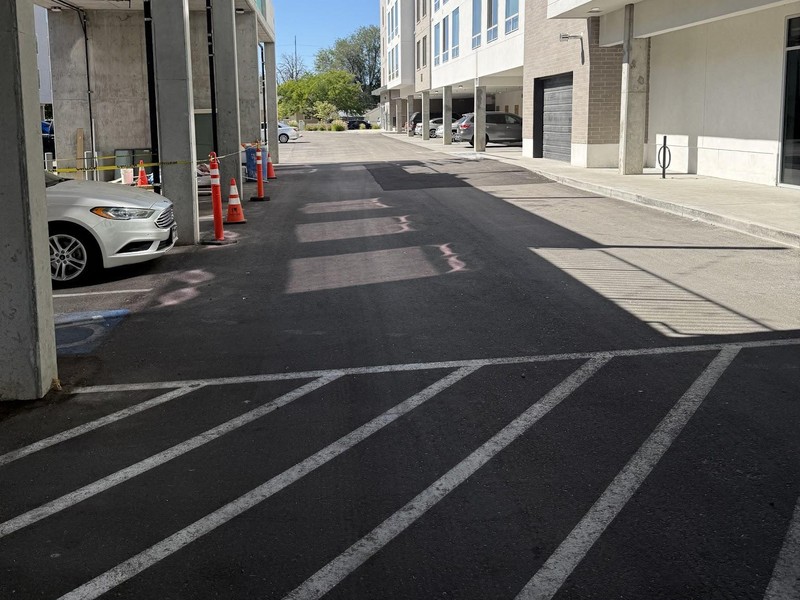
Sinkholes, pothole collapse, and sub-base failures that open suddenly in commercial parking lots or private roads create immediate vehicle-damage and liability risk. We perform emergency asphalt patching using cold-mix temporary patch material to restore a driveable surface and close the safety hazard. Cold-mix emergency patch is a temporary fix; we follow up with hot-mix permanent repair as soon as weather and scheduling allow.
Insurance Claim Documentation
Storm damage, hail events, and vehicle-impact damage are frequently covered under commercial property insurance and homeowners policies. Filing a claim correctly requires professional documentation—not just a cell phone photo of the damage.
We provide:
- Written damage assessment with cause notation (hail, wind, vehicle impact, freeze-thaw) and extent of damage by area
- Organized photo documentation including wide, medium, and close-up photos of each damage zone labeled by location
- Itemized repair estimate formatted for insurance adjuster review, separating materials, labor, and mobilization costs
- Adjuster availability — we are available for a phone or on-site walkthrough with your insurance adjuster at no additional charge
Contact your insurer as soon as possible after a storm or impact event, before any permanent repair work begins. Most policies require notification before repairs are completed. We can begin emergency stabilization work while the claim is in process, but document the damage before and after any stabilization we perform.
Response Time Targets
These are our targets, not contractual guarantees—actual response time depends on current crew availability, weather conditions, and the number of simultaneous emergency calls in our service area after a major storm event.
| Situation | Target Response | Notes |
|---|---|---|
| Active water intrusion through failed siding or gutters | Same day | Salt Lake County / Utah County primary area |
| Vehicle impact on storefront bollards | Same day | Safety assessment + temporary protection |
| Gutter collapse under snow or ice | Same day or next morning | Emergency reattachment or temporary support |
| Sinkhole or pothole opening on active commercial lot | Same day | Emergency cold-mix patch |
| Post-hail damage assessment | Within 24 hours of event | Written damage assessment provided |
| Post-wind siding exposure (no active rain) | Within 24 hours | Tarping and stabilization |
| Non-critical damage needing priority scheduling | Within 48 hours for assessment | Permanent repair schedule discussed at assessment |
Need Immediate Help?
Call our main line 24 hours a day, seven days a week. We pick up. If you reach voicemail outside business hours, leave your name, property address, and a brief description of the situation and we will call back within 30 minutes.
Get In Touch
Ready for a quote or have a question? We’re Utah-based, Utah-run, and we’ll come out to your property for a free on-site estimate.
Get A Free Quote