Commercial Seal Coat Maintenance — Asphalt Emulsion for Utah Parking Lots
Seal coat replenishes the binder oils that oxidize out of asphalt under UV and traffic load. Applied on a 2-year cycle, it extends pavement life 3 to 5 years per application and costs a fraction of overlay or reconstruction.
What Seal Coat Does and Why It Matters
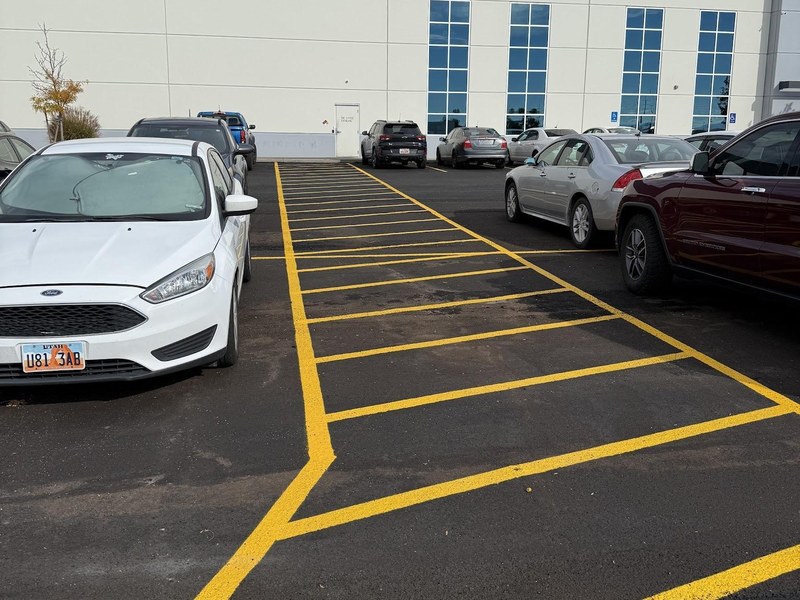
Asphalt pavement is a mixture of aggregate and asphalt binder. The binder oxidizes under UV exposure, loses flexibility, and becomes brittle—this is why asphalt fades from black to gray and develops surface cracking over 5 to 8 years without maintenance. Seal coat is an emulsified asphalt product applied in 2 to 3 thin coats that penetrates the surface, replenishes oxidized binder, and creates a protective barrier against UV, fuel spills, and water infiltration. It restores the dark appearance, improves drainage, and provides a fresh surface for re-striping.
Asphalt Emulsion vs. Coal-Tar Sealant
We use refined tar-free asphalt emulsion sealant on commercial properties. Coal-tar sealant, still used by some contractors, contains polycyclic aromatic hydrocarbons (PAHs) that are classified carcinogens and are banned by several municipalities and states. Asphalt emulsion provides comparable durability to coal-tar for most commercial applications, is significantly lower in volatile emissions during application, and is not subject to regulatory risk. For properties with storm water discharge into sensitive watersheds (common in Utah's foothills municipalities), asphalt emulsion is the only defensible choice.
Coverage Rate and Application
Standard commercial application: two coats of asphalt emulsion at a combined 2 gallons per 100 square feet (0.02 gallons per square foot). Each coat is applied by squeegee or spray, depending on lot complexity. Squeegee application ensures even coverage on rough or textured surfaces; spray application is faster on smooth, open lots. We add silica sand to the sealer at 3 to 4 pounds per gallon for texture and slip resistance—particularly important for commercial properties with significant pedestrian traffic.
Cure Time and Property Access Planning
Seal coat requires a minimum 24-hour cure time before vehicle traffic. Temperature must stay above 50°F throughout the cure window—we monitor forecasts and will not apply seal coat if temperatures will drop below 50°F within 24 hours of application. Property access planning is the biggest operational consideration for commercial seal coating. We phase commercial lots in sections to keep access open to buildings, fire hydrants, and accessible parking. A typical phased schedule completes each section in a single day with access restored the following morning.
Recent Seal Coat Maintenance Projects
Common Questions
- How often should I seal coat my commercial lot?
- Every 2 years is the standard commercial maintenance cycle. New pavement should wait 1 to 2 years before the first seal coat—fresh asphalt needs time to cure and off-gas before sealer is applied. Lots with heavy truck traffic may need annual applications on drive aisles.
- Do I need to close my lot for seal coating?
- Seal coated areas must be closed to vehicle traffic for 24 hours. We phase commercial lots in sections—typically two or three sections over two or three days—so businesses maintain access to their buildings throughout the project. We coordinate phasing with you in advance to minimize operational disruption.
- Can I seal coat over cracks?
- Seal coat over unsealed cracks will show through the sealer within one season. The correct sequence is crack seal, allow 48-hour cure, then apply seal coat. Seal coat does not fill or seal cracks; it is a surface coating, not a crack repair material.
Ready to Get Started?
Get a free, itemized estimate for your commercial seal coat maintenance project. We typically schedule site visits within 48 hours and deliver written quotes the next business day.
Get In Touch
Ready for a quote or have a question? We’re Utah-based, Utah-run, and we’ll come out to your property for a free on-site estimate.
Get A Free Quote