
Utah Striping Experts You Can Trust
Faded striping creates confusion, liability exposure, and ADA compliance gaps. We stripe new lots, re-stripe after seal coat, and reconfigure parking layouts for commercial properties across Utah — from standard stall markings to full ADA compliance packages with accessible stalls, van access aisles, and curb ramp indicators.
Download A Free Asphalt Seal Coat Timing Guide for Commercial Properties
When to seal, why the timing matters, how Utah's climate affects the schedule, and the cost math behind a 2-year maintenance cycle.
-
Licensed & Insured in Utah
-
Serving the Wasatch Front
-
Commercial & Residential Experts
What We Do
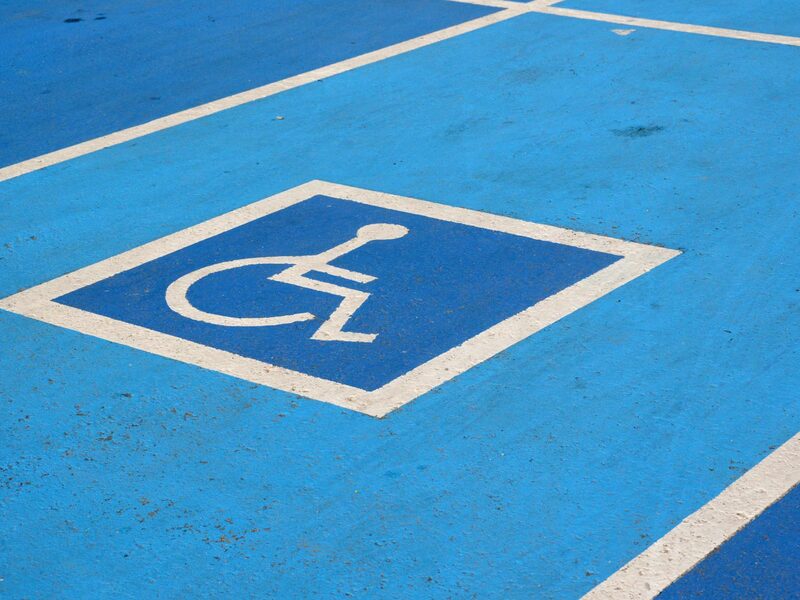
We stripe parking lots and pavement markings for commercial property managers, municipalities, HOA communities, retail centers, warehouses, and industrial facilities. Work covers standard stall lines, handicap stalls with ADA-compliant symbols and signage, fire lane markings, loading zone designations, directional arrows, stop bars, crosswalks, and custom text markings. We use traffic paint for standard re-stripe work and thermoplastic for high-traffic areas or where longer durability is required — thermoplastic is heat-bonded into the surface and lasts significantly longer than paint. All ADA work is laid out per current ADA Standards for Accessible Design, including correct stall width, access aisle width, and surface slope requirements. We provide as-built stall count documentation after completion for property records.
Don't Let Faded Striping Send The Wrong Message.
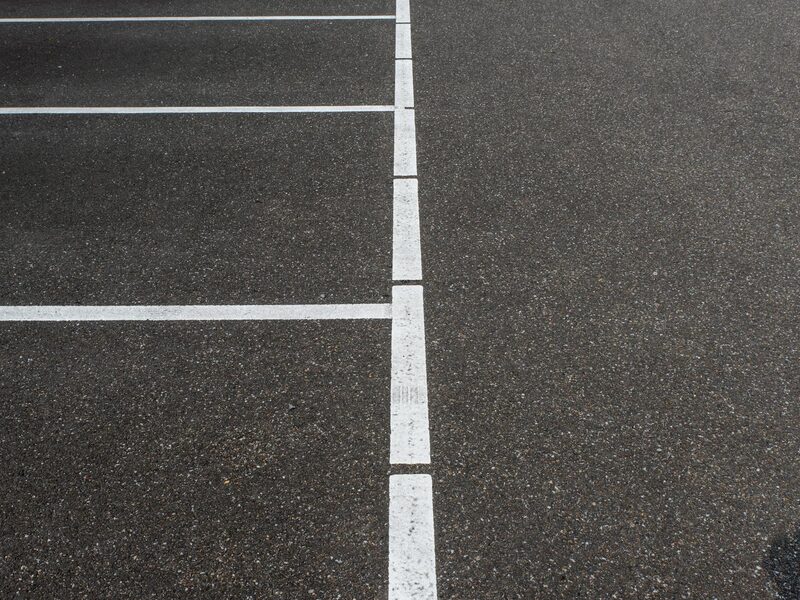
Faded lines read as neglect. Crisp, code-correct striping reads as a well-run business.
- Curb Appeal Loss — Faded stripes are the first thing customers notice when pulling in.
- ADA Compliance — Fading ADA stalls and access aisles can trigger citations and lawsuits.
- Fire Code Risk — Missing fire lane markings can fail a fire marshal inspection.
- Parking Efficiency — Faded lines reduce usable stalls and create lot confusion.
Our Striping Work
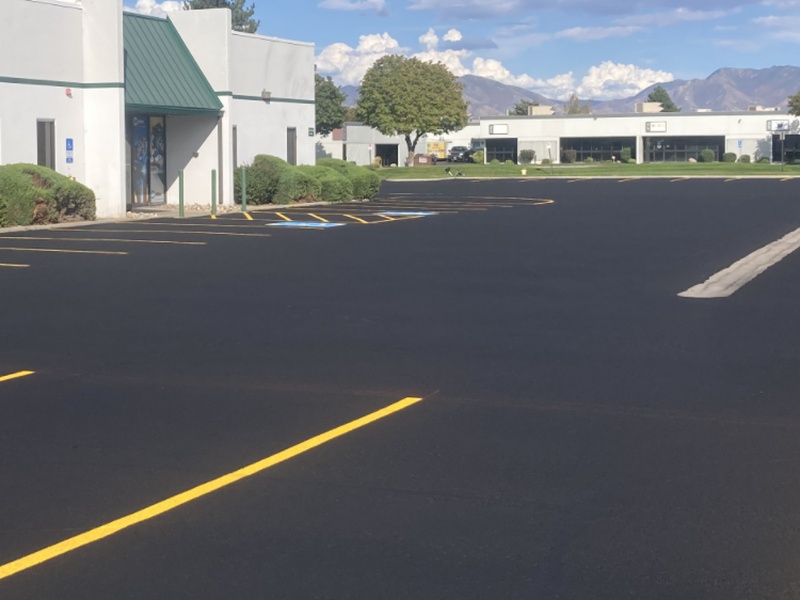
Before & After
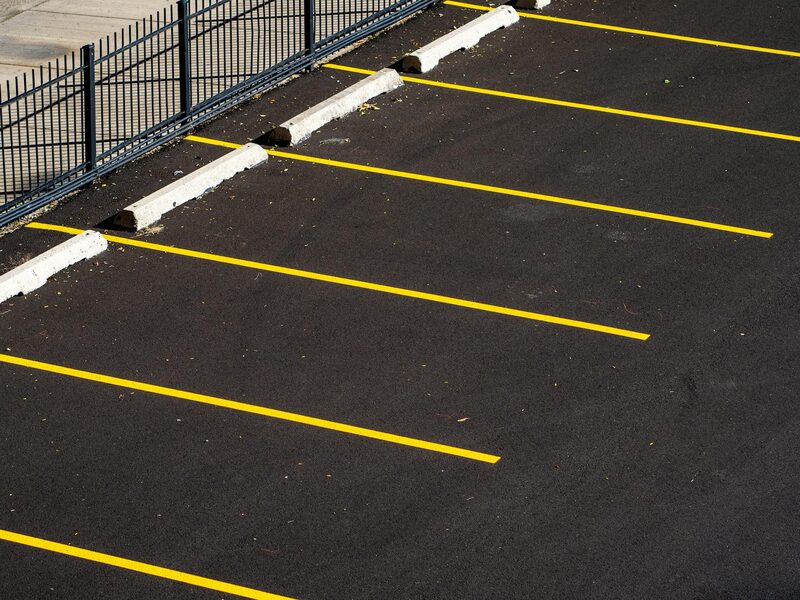
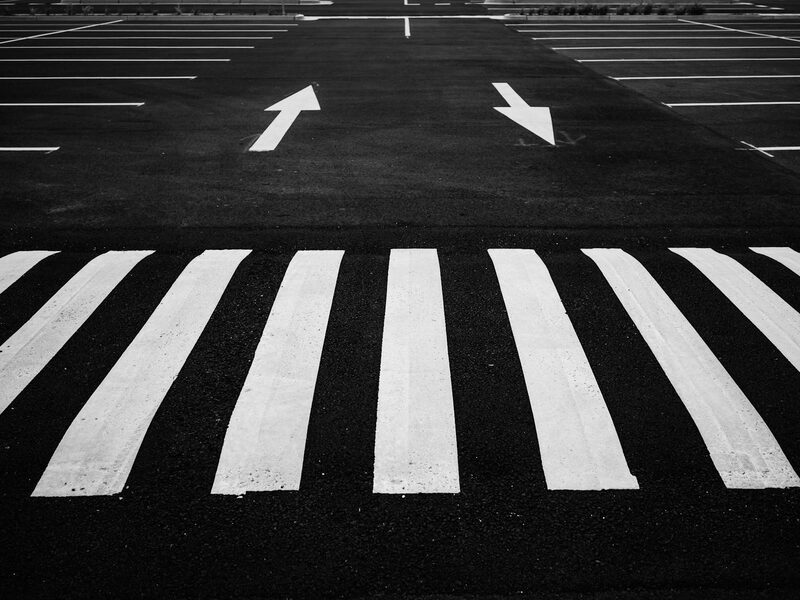
Faded lines read as neglect. Fresh striping reads as "open for business" — and it happens in a single overnight session.
Schedule Your Free Striping Estimate
We'll come out, take a look, and give you a straight answer — no pressure.
Our Process
-
Layout review and planning
We review the existing layout or new design with you — stall count, ADA stall placement, fire lane routing, and any traffic flow changes. For new lots or reconfigurations we provide a layout sketch for approval before painting.
-
Surface measurement and marking
The lot is measured and chalk-lined to establish stall widths, aisle widths, and ADA stall locations before any paint is applied.
-
Striping application
Lines are applied with a line-striping machine set to specification width. ADA symbols, arrows, and text are applied by hand template or stencil. Fire lane curbs painted red where required.
-
Final count and documentation
We count and record total stalls, accessible stalls, van-accessible stalls, and any other marked features. We provide the count to you in writing for your property files and ADA compliance records.

Representative Projects
- Commercial parking lot re-stripe after seal coat — 140 standard stalls, 6 ADA stalls including 2 van-accessible, 4 fire lane sections, 1 day.
- Warehouse facility layout reconfiguration — existing lot converted from angled to perpendicular stalls, new directional arrows and stop bars, 1.5 days.
- New construction lot — 85-stall office parking lot, full layout, ADA package, loading zone, directional arrows, 1 day.
Common Questions About Striping
What are the ADA requirements for parking stalls?
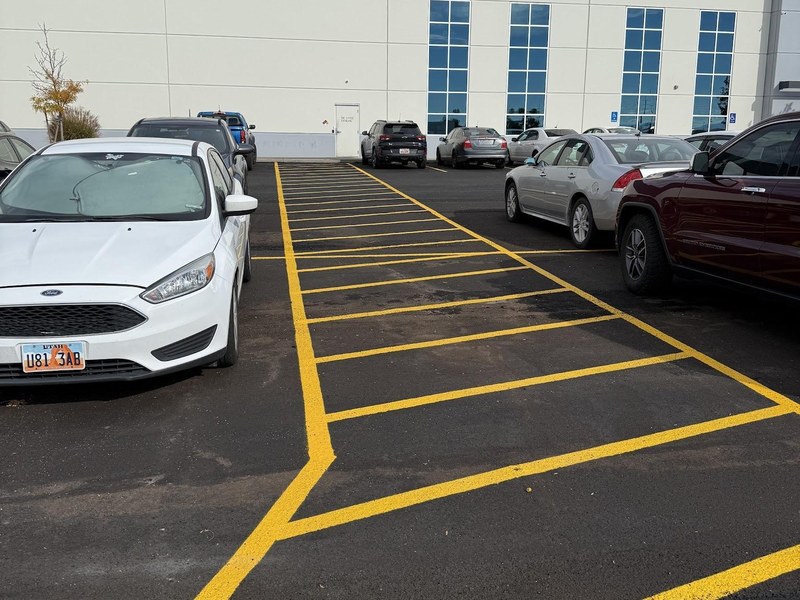
ADA Standards require one accessible stall per 25 total stalls for lots up to 100 spaces. Standard accessible stalls are 8 feet wide with a 5-foot access aisle. Van-accessible stalls require an 8-foot access aisle. The required number of van-accessible stalls depends on total lot size. We lay out per current standards and can review your specific situation during the estimate.
Traffic paint versus thermoplastic — which should I use?
Traffic paint is suitable for standard re-stripe work and is the most common choice for routine parking lot maintenance. Thermoplastic is significantly more durable — 5–7 years versus 2–4 for paint in normal conditions — and is preferred for high-traffic areas, bus lanes, and locations where repainting frequently would be disruptive. We recommend thermoplastic for fire lane markings and ADA symbols on high-use lots.
How long after seal coating can you stripe?
We typically wait a minimum of 48–72 hours after seal coat application before striping, longer if overnight temperatures are cool. Striping too early can cause paint to bleed or not bond properly. We coordinate the timing as part of any combined seal coat and stripe project.
Can you reconfigure our existing lot layout?
Yes. If you want to change stall angle, add stalls, redirect traffic flow, or relocate ADA stalls, we layout the new design, confirm it with you, and apply. Old lines are addressed by either new lines overstriping them (which works when the new lines are distinct enough) or by blackout paint applied to old markings before the new layout goes down.
Ready To Get Started With Striping?
Free, on-site, written estimate. No commitment.
Proudly Serving All Of Utah
We serve the Wasatch Front and beyond — from Salt Lake County to Utah County, Davis, Weber, Tooele, Summit, and surrounding communities.
- Salt Lake City
- West Jordan
- South Jordan
- Sandy
- Draper
- Provo
- Orem
- Lehi
- American Fork
- Ogden
- Layton
- Bountiful
- West Valley City
- Park City
- Tooele
Get In Touch
Ready for a quote or have a question? We’re Utah-based, Utah-run, and we’ll come out to your property for a free on-site estimate.
Get A Free Quote