
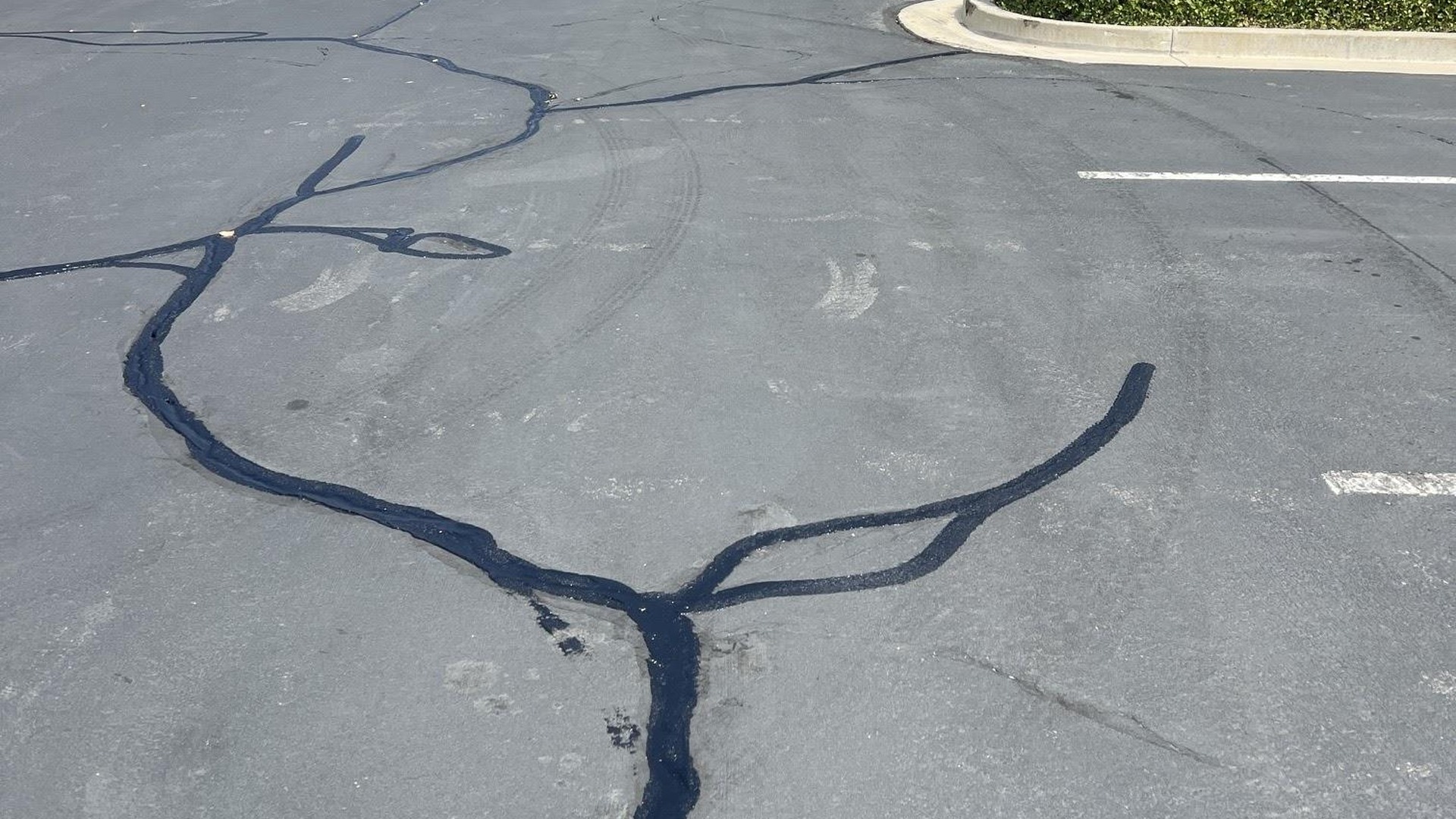
Commercial Crack Sealing — Hot-Pour Rubberized Sealant for Utah Parking Lots
Crack sealing is the highest-return maintenance investment in pavement management. A $2,000 crack seal application extends pavement life 3 to 5 years by blocking water infiltration before it reaches the base.
Why Cracks Must Be Sealed Before They Widen
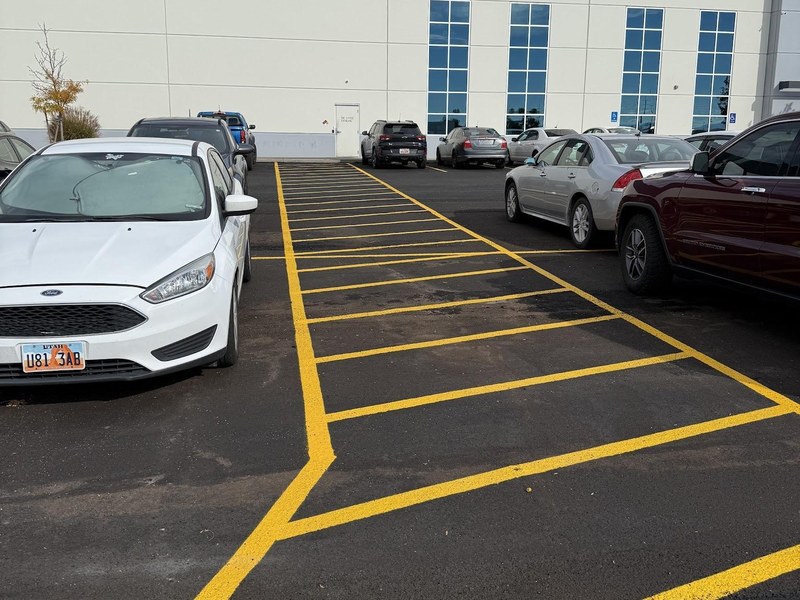
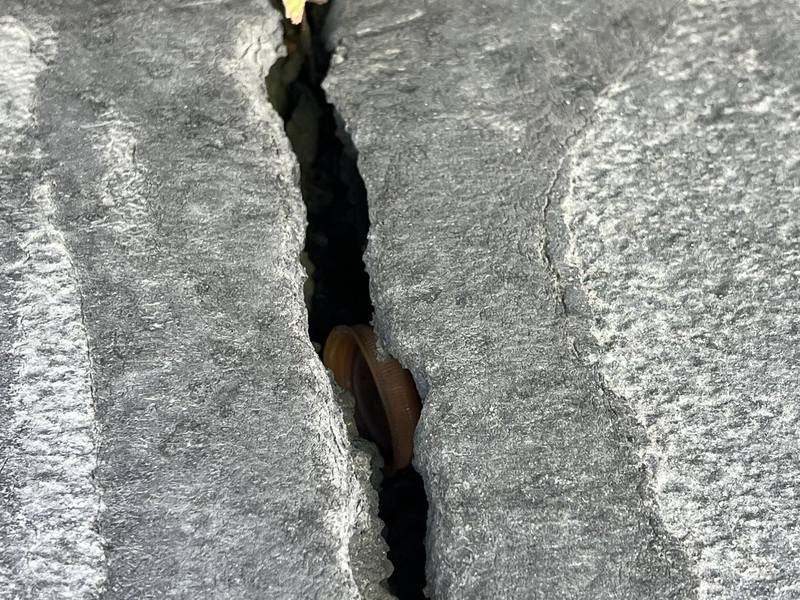
Water is the primary enemy of asphalt pavement. When a crack wider than 1/4 inch goes unsealed through a Utah winter, freeze-thaw cycles force water into the sub-base, expand the void, and accelerate base failure. A crack that costs $2 per linear foot to seal today will cost $8 per square foot to patch as a pothole in 18 to 24 months. Crack sealing is not cosmetic—it is load-path protection.
Material: ASTM D6690 Hot-Pour Rubberized Sealant
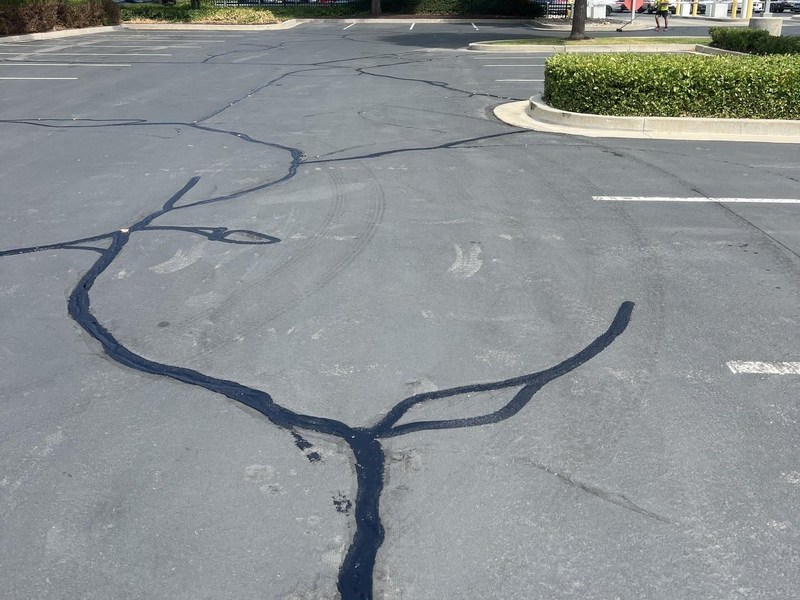
We use Type IV ASTM D6690-compliant hot-pour rubberized sealant. Unlike cold-pour caulk or DIY crack filler, hot-pour material is heated to 375–400°F in a direct-fire melter and applied at temperature. When it cools, it bonds chemically to the asphalt walls of the crack and remains flexible at Utah temperature extremes—from -20°F winter lows to 110°F summer surface temps. This flexibility allows the sealant to move with the pavement through thermal cycling without de-bonding. Cold-pour material becomes brittle in winter and pops out. We do not use cold-pour material on commercial properties.
Route-and-Fill vs. Clean-and-Fill
For cracks wider than 1/2 inch and all structural cracks, we route before filling. Routing cuts a uniform 3/4-inch-wide, 3/4-inch-deep reservoir along the crack path—this reservoir geometry holds significantly more sealant than the irregular crack void and creates a wider bonding surface on both walls. Routed cracks hold sealant 40 to 60 percent longer than clean-and-fill applications according to NCHRP testing data. For hairline cracks and cracks between 1/4 and 1/2 inch on lots in otherwise good condition, clean-and-fill (compressed air blowout, wire brushing, sealant application) is cost-appropriate.
Temperature Window and Scheduling
Hot-pour crack sealing requires ambient temperatures between 40°F and 80°F for proper adhesion and sealant flow control. Sealing on hot summer days (pavement surface over 120°F) causes sealant to skin over before it fully penetrates the crack—we schedule early-morning starts on hot summer days. Sealing below 40°F increases sealant viscosity and reduces adhesion. The optimal Utah window is April through October with morning starts. We monitor 7-day forecasts and schedule proactively.
Recent Crack Seal Projects
Common Questions
- What crack width should I seal?
- Cracks 1/4 inch to 1.5 inches wide are the ideal candidates for hot-pour crack sealant. Hairline cracks under 1/4 inch are too narrow for proper sealant penetration—treat with seal coat. Cracks over 1.5 to 2 inches wide with edge break indicate base movement; these need patching before sealing.
- How soon after crack sealing can we open the lot?
- Hot-pour sealant achieves surface tack-free in 20 to 30 minutes at 70°F ambient. We apply a sand broadcast over fresh sealant to prevent tracking onto shoes and tires. The lot is open to traffic within 30 to 45 minutes of application. We do not apply sealant and seal coat the same day—seal coat requires cured crack sealant as a base.
- How often should commercial lots be crack-sealed?
- Annual inspection with crack sealing as needed is the correct cadence. Most commercial lots need crack sealing every 1 to 3 years depending on traffic load and pavement age. Budget approximately $0.03 to $0.08 per square foot of lot annually for crack sealing maintenance.
Ready to Get Started?
Get a free, itemized estimate for your commercial crack seal project. We typically schedule site visits within 48 hours and deliver written quotes the next business day.
Get In Touch
Ready for a quote or have a question? We’re Utah-based, Utah-run, and we’ll come out to your property for a free on-site estimate.
Get A Free Quote