Crack Seal Maintenance Schedule — Annual Cycle for Utah Commercial Lots
Crack sealing is most effective on an annual or biennial cycle. Here is how to integrate it into your overall pavement maintenance program.
Annual Inspection and Crack Mapping
The correct cadence begins with a spring inspection, ideally in late April after the last freeze-thaw cycle has opened existing cracks to their maximum width. Walk the lot with a crack density estimate: count total linear feet of cracks over 1/4 inch wide per 1,000 square feet of lot. A lot with under 50 lf per 1,000 sq ft of lot area is in good condition. 50 to 150 lf per 1,000 sq ft is moderate and indicates annual sealing is warranted. Over 150 lf per 1,000 sq ft suggests accelerated deterioration and a more comprehensive pavement assessment is warranted—crack sealing alone is not adequate maintenance for a lot in this condition.
Integration with Seal Coat Cycle
Crack sealing and seal coating must be sequenced correctly. Crack seal first, allow 48 hours of full cure, then apply seal coat. Do not seal coat first—emulsion seal coat applied before crack sealant creates a contaminated bond surface that causes the hot-pour sealant to delaminate from the crack walls. The biennial seal coat cycle creates a natural crack seal trigger: on each seal coat year, perform crack sealing 48 hours before the seal coat crew arrives. On non-seal coat years, perform a spring crack survey and seal new cracks. This schedule is: Year 1 — crack seal + seal coat. Year 2 — crack seal only. Year 3 — crack seal + seal coat. Year 4 — crack seal only. And so on.
Optimal Utah Scheduling Windows
The two best windows for crack sealing in Utah are: (1) late April to early June, after freeze-thaw season but before summer heat pushes pavement surface temperatures above 120°F; and (2) September to mid-October, before first frost. The spring window is preferred because cracks are at maximum width after thermal contraction through winter. The fall window is useful for properties that missed the spring window or need crack sealing ahead of their fall seal coat application. Summer crack sealing (July to August) is feasible with early-morning scheduling—first crack sealed by 7 a.m., finished by 10 a.m. before pavement surface temperature climbs past the sealant window.
Documentation and Trending
Maintaining a crack seal history for your property allows you to trend crack density over time. A lot that increases from 500 lf per year to 1,500 lf per year over 3 years is accelerating—this signals a structural issue (base damage, drainage failure) that crack sealing cannot resolve. Annual crack survey documentation—with a sketch showing crack locations and measurements—is valuable for capital planning and for demonstrating maintenance due diligence to potential property buyers or insurers. We provide a post-project crack map with every project.
Recent Crack Seal Projects
Common Questions
- How do I know when a property has passed the point where crack sealing is enough?
- Crack sealing has reached its effective limit when: cracks are reopening within 6 months of sealing; alligator cracking is present in multiple lot sections; crack density exceeds 200 lf per 1,000 sq ft of lot area; or visible deflection occurs under traffic. These are signals for a full lot assessment and likely a patching or overlay scope rather than ongoing crack seal maintenance.
- Can I skip a year on a well-maintained lot?
- On a recently overlay or seal-coated lot with very low crack density, skipping one annual cycle is acceptable. Cracks that are under 1/4 inch wide at the end of one season may be sealable the following spring when thermal contraction has opened them to full width. However, skipping two consecutive cycles in a climate with annual freeze-thaw loading risks water infiltration damage in the second winter.
- Does crack sealing affect parking lot striping?
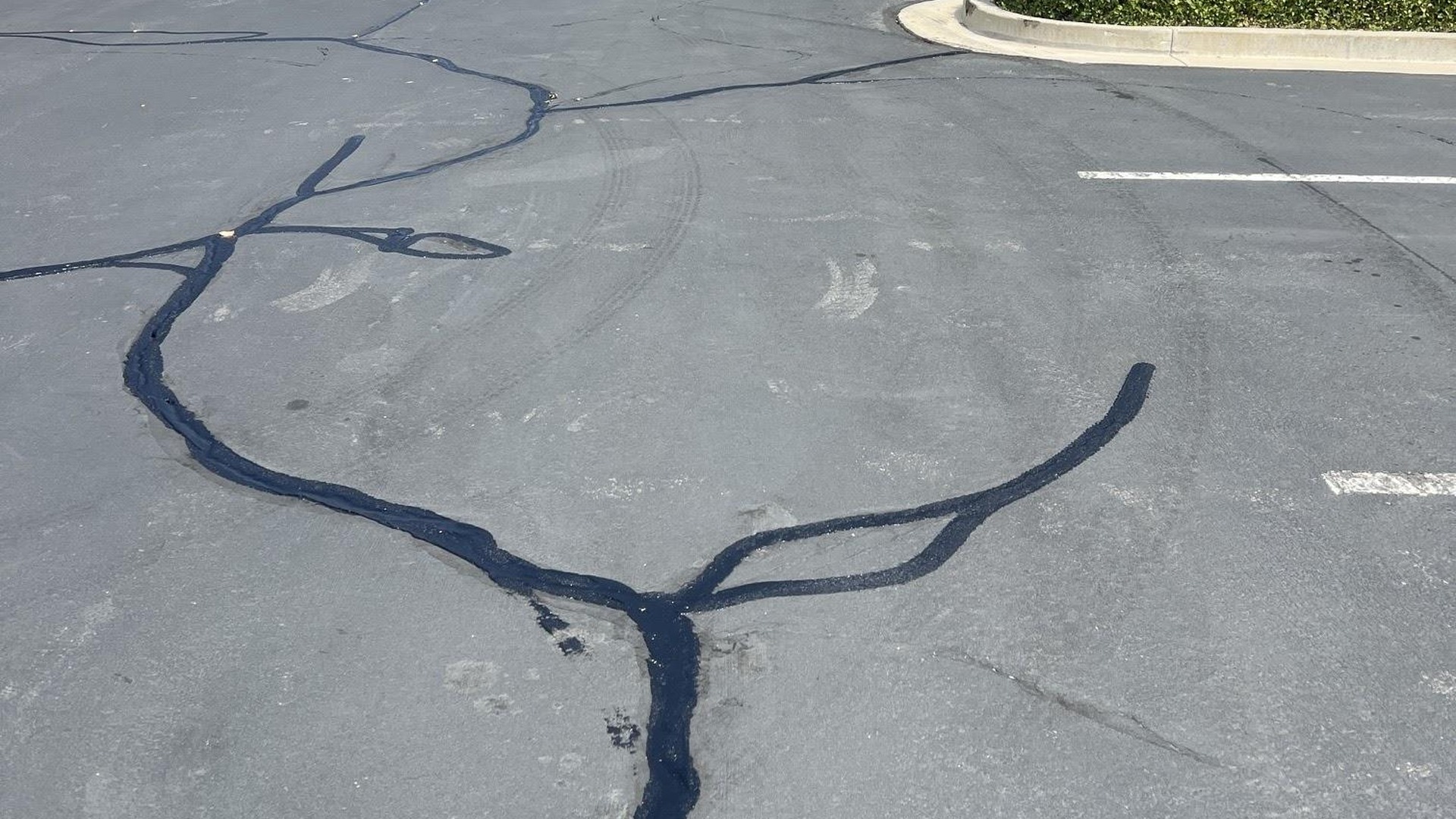
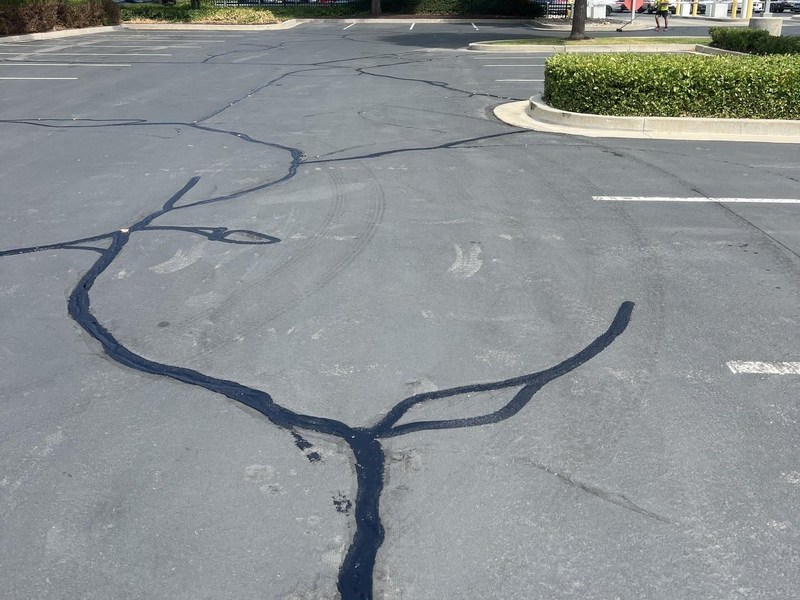
- Crack sealant applied across existing painted lines will bond over the paint and change the line appearance locally—the overband is dark brown-black when cured. If appearance is critical (a freshly striped lot), apply crack seal first and stripe after the sealant cures. If the lot was striped before crack sealing was scheduled, the overband is visible but the striping function is not impaired.
Ready to Get Started?
Get a free, itemized estimate for your commercial crack seal project. We typically schedule site visits within 48 hours and deliver written quotes the next business day.
Get In Touch
Ready for a quote or have a question? We’re Utah-based, Utah-run, and we’ll come out to your property for a free on-site estimate.
Get A Free Quote