
Utah Crack Seal Experts You Can Trust
Cracks are where pavement failure starts. Water gets in, the base softens, freeze-thaw cycles widen the crack, and a small problem becomes an expensive repair. Hot-pour rubberized crack sealing is the most cost-effective maintenance you can do on asphalt that still has structural integrity.
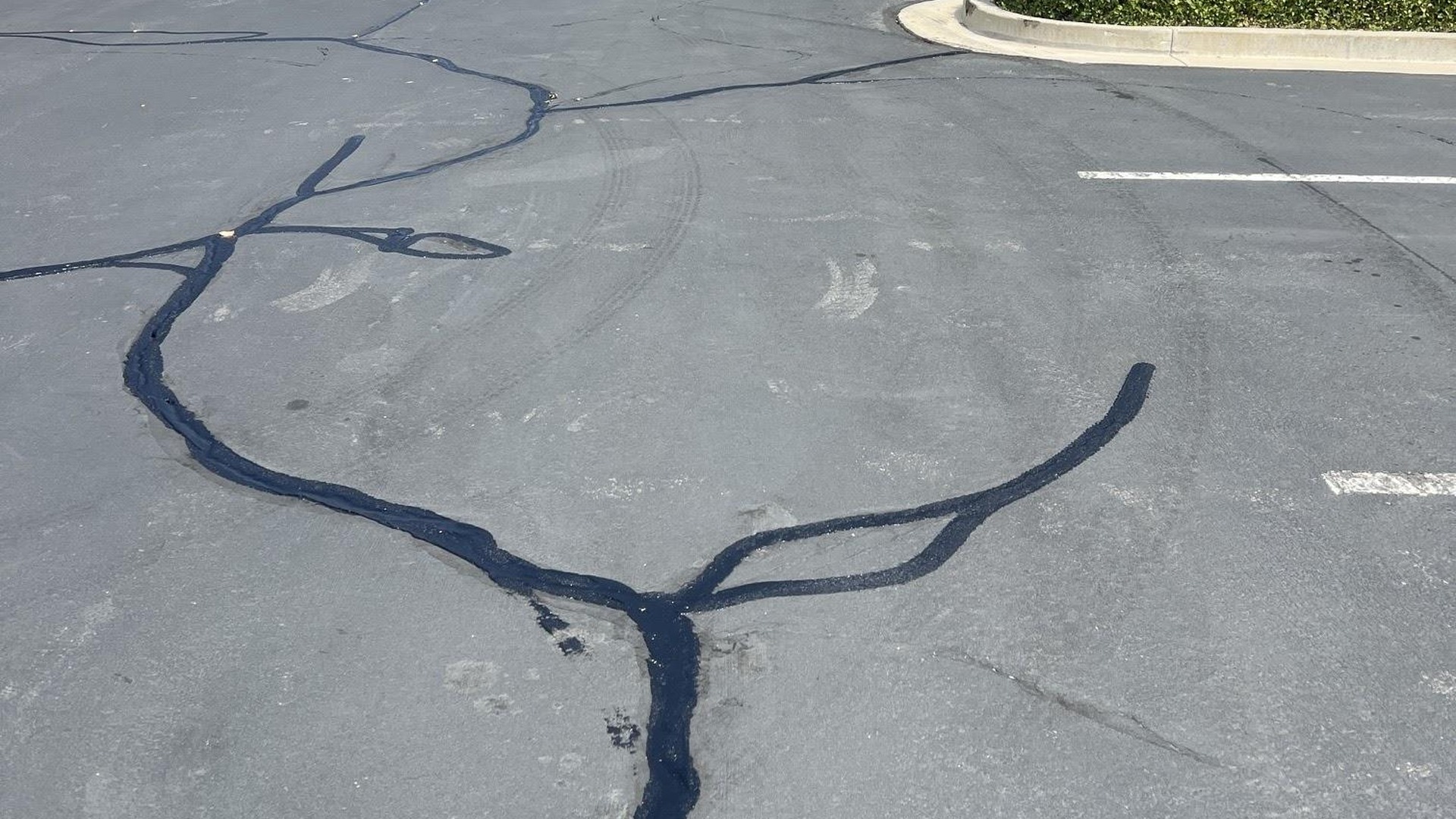
Download A Free Asphalt Seal Coat Timing Guide for Commercial Properties
When to seal, why the timing matters, how Utah's climate affects the schedule, and the cost math behind a 2-year maintenance cycle.
-
Licensed & Insured in Utah
-
Serving the Wasatch Front
-
Commercial & Residential Experts
What We Do
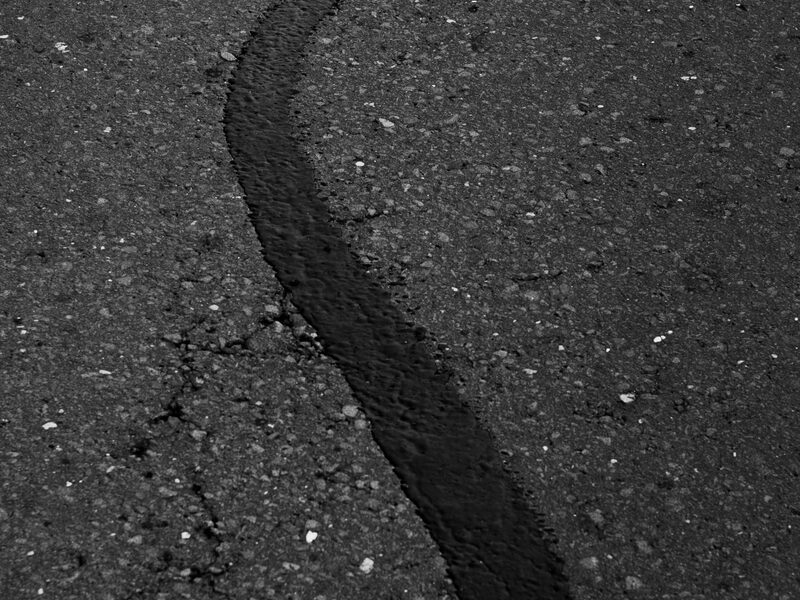
We perform hot-applied rubberized crack sealing on asphalt pavement for commercial parking lots, residential driveways, HOA communities, and private access roads. The process starts with routing — we cut a reservoir profile into cracks wider than about a quarter inch so the sealant has mechanical grip and flex room. Narrower cracks are cleaned out with a wire brush or blower. We then apply hot-pour rubberized sealant, which stays flexible through temperature cycles rather than cracking like cold-applied products. A properly sealed crack resists water infiltration for several years before it needs attention again. Crack sealing is most effective when done while the surrounding pavement is still in reasonably good condition — it is a maintenance tool, not a structural fix for pavement that has already failed.
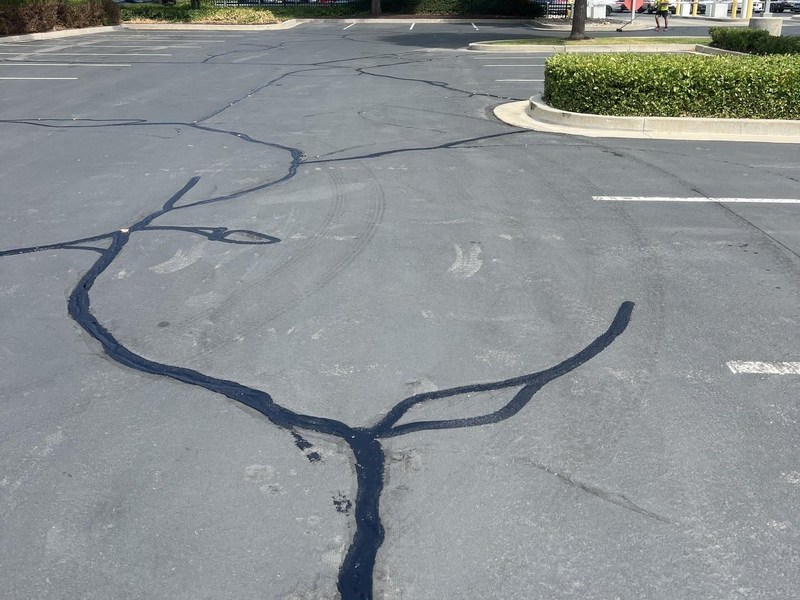
Don't Let Cracks Become Potholes.
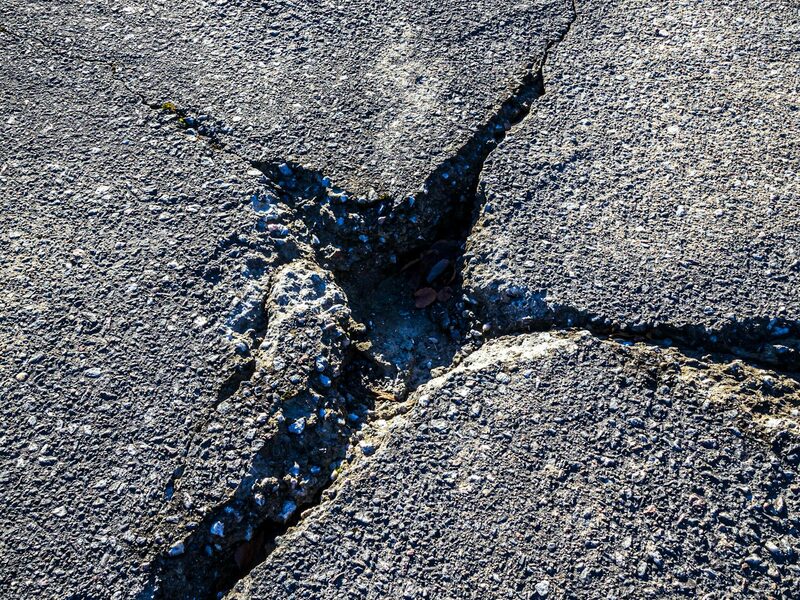
A quarter-inch crack today is a full pothole next spring. Hot-pour sealant stops the clock.
- Water Infiltration — Cracks let water under the pavement, where it breaks the sub-base.
- Freeze-Thaw Damage — Each winter cycle widens and deepens every untreated crack.
- Seal Coat Prep — Seal coat over unsealed cracks is a wasted investment — crack seal first.
- Compounding Cost — Crack seal at pennies per foot; replacement at dollars per square foot.
Our Crack Seal Work
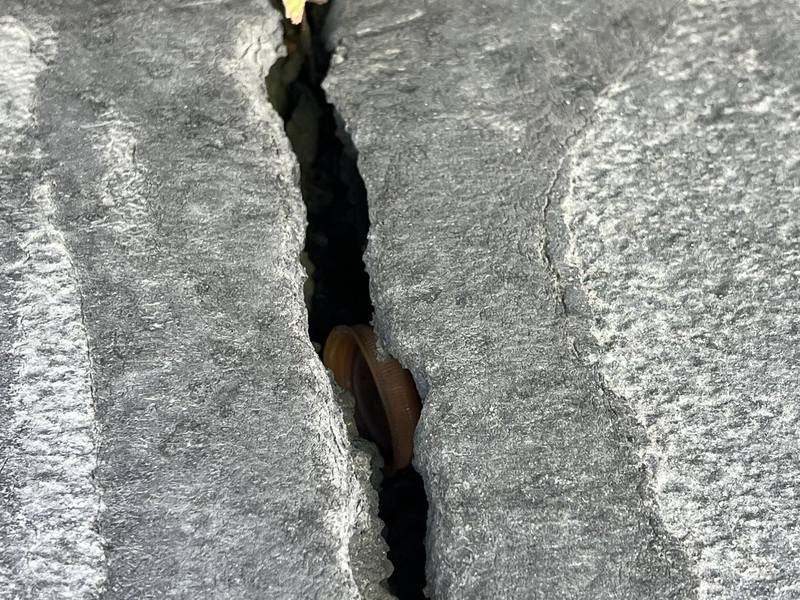
Before & After
A ten-cent crack today is a hundred-dollar pothole next spring. Hot-pour sealant blocks water before freeze-thaw can do its worst.
Schedule Your Free Crack Seal Estimate
We'll come out, take a look, and give you a straight answer — no pressure.
Our Process
-
Crack inspection and mapping
We walk the pavement and identify cracks suitable for sealing — structural and alligatored areas are called out separately because they need repair, not sealing.
-
Cleaning and routing
Cracks are blown clear of debris. Cracks wide enough to route (generally 1/4 inch or wider) get a routed reservoir for better sealant adhesion and flexibility.
-
Hot-pour application
Hot-applied rubberized sealant is melted and applied directly into the crack, slightly overfilling to account for settling. Material is tooled flush with a squeegee.
-
Cure and traffic hold
Sealed cracks need roughly 30–60 minutes before foot traffic and a few hours before vehicle traffic depending on temperature. We coordinate timing with you.

Representative Projects
- Commercial parking lot — 1,800 linear feet of cracks routed and hot-pour sealed across a 50,000 sq ft lot, 1 day.
- HOA private road — 400 linear feet of longitudinal and transverse cracks sealed ahead of a scheduled seal coat, half a day.
- Residential driveway — 60 linear feet of cracks sealed and leveled flush, 2 hours.
Common Questions About Crack Seal
What is the difference between hot-pour and cold-applied crack filler?
Hot-pour rubberized sealant is melted and applied at high temperature. When it cures it remains flexible through temperature cycles — it expands and contracts with the pavement. Cold-applied products are easier to use but tend to be brittle, especially in Utah winters, and often need reapplication within a season or two. We use hot-pour on all commercial and most residential work.
Does crack sealing work on any crack?
No. Crack sealing works on isolated cracks in pavement that still has structural integrity. Alligator cracking (a web of interconnected cracks covering a section) indicates base failure — sealing over it just delays the inevitable. We separate structural failures from seal-able cracks during the assessment.
Should I crack seal before seal coating?
Yes — crack sealing should happen before seal coating. Seal coat will not fill cracks and will not prevent water infiltration through an existing crack. The correct sequence is: repair structural failures first, then crack seal, then seal coat.
How long does crack sealing last?
Hot-pour crack sealing in Utah conditions typically holds 3–5 years on a good pavement substrate before cracks work through again. On a 2-year seal coat maintenance cycle, cracks should be addressed each time the pavement is seal coated.
Ready To Get Started With Crack Seal?
Free, on-site, written estimate. No commitment.
Proudly Serving All Of Utah
We serve the Wasatch Front and beyond — from Salt Lake County to Utah County, Davis, Weber, Tooele, Summit, and surrounding communities.
- Salt Lake City
- West Jordan
- South Jordan
- Sandy
- Draper
- Provo
- Orem
- Lehi
- American Fork
- Ogden
- Layton
- Bountiful
- West Valley City
- Park City
- Tooele
Get In Touch
Ready for a quote or have a question? We’re Utah-based, Utah-run, and we’ll come out to your property for a free on-site estimate.
Get A Free Quote